
Emily Ota | Head Editor
February 12, 2026
February usually marks a time of great patriotic American unity, the month of the Super Bowl. The Super Bowl brings people together to root for their team. Super Bowl LX was quite different from prior years–it represented the immense separation currently within our own country.
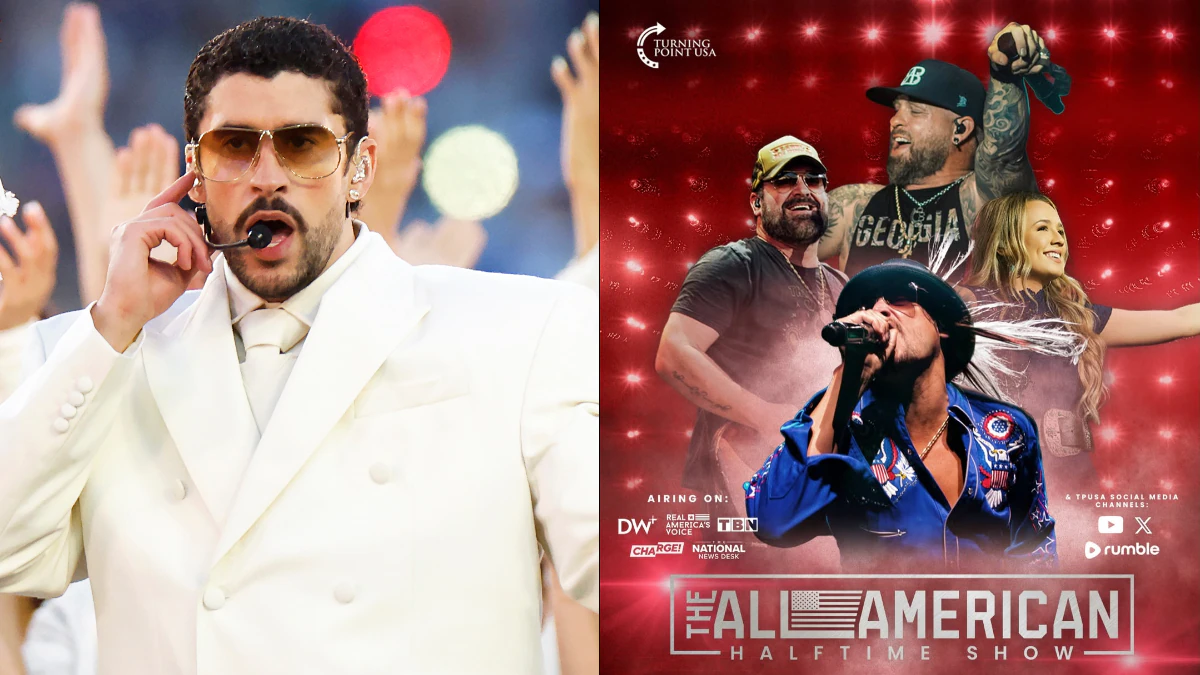
Leading up to the Super Bowl, Americans intensely anticipated Puerto Rican Bad Bunny performing the halftime show, whether that be positively or negatively. Especially with his recent Grammys acceptance speech, stating “ICE out,” the singer has gained loads of media traction. While Bad Bunny fans and those who oppose ICE celebrated the performance, calling it a celebration of inclusivity and Puerto Rican culture, others viewed it as a disappointment to an “all-American” holiday. These two contrasting halftime shows symbolize the polarization of America and the different demographics who support each side.
Bad Bunny haters created many different reasons for not supporting his performance. The most common being “he’s not a real American” (yes, yes he is), “I can’t understand what he is singing,” “his lyrics are inappropriate,” and “I just don’t like his music.” To combat this “disgrace” of a halftime show, Turning Point USA came to the rescue with their own alternate performance for those unwilling to sit through Bad Bunny’s show. TPUSA’s concert included country artists Kid Rock, Brantley Gilbert, Lee Brice, and Gabby Barrett, and was streamed on TPUSA’s YouTube channel, TBN, The Daily Wire, Real America’s Voice, OANN, and Rumble. The Turning Point show appealed to a mostly Republican, country audience. The show featured the various singers on a stage in front of a huge American flag with 200 audience members present. Even though there was a small crowd at the event, around 5-6 million fans watched online. Freshman Devin McLeish confirmed that she tuned into the TPUSA performance rather than Bad Bunny, even though she is usually an avid watcher of the NFL halftime show. She stated that she wishes they picked someone else for the job because she “[doesn’t] like his music.”
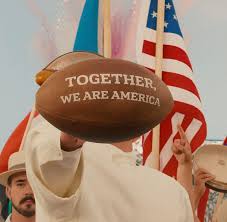
On the other hand, Bad Bunny’s performance was not contained to a stage. He made the field interactive, taking the audience through the many areas of Puerto Rico. Like TPUSA’s concert, Bad Bunny brought out other musicians: Lady Gaga and Ricky Martin, not to mention the range of celebrities in the “casita.” Throughout the thirteen-minute performance, Bad Bunny encapsulated many cultural aspects and powerful messages. He sang on an electrical pole, symbolizing the neglect of the island in terms of power outages, walked through a living room and handed his Grammy to a young boy, representing future generations of Latin-American artists, and took a shot from Toñita, the owner of the Puerto Rican Social Club. To conclude the act, Bad Bunny shouted out all American countries in an effort to display that America is not limited to the United States, holding up a football that read “Together, we are America.” Luisa D’Acosta, junior at SCHS, appreciated this message, claiming that he was intending “to unite people of all countries during a very divisive time.” In response to people disregarding Bad Bunny “as not American enough” for the Super Bowl, D’Acosta argued that even if he was not American, which he is, it would not be the first time. U2, Shakira, and Coldplay are all non-American halftime performances, causing D’Acosta to believe that people do not have a problem with Bad Bunny being American enough, they are concerned about him “not being white enough.”
The alternate halftime show definitely made Super Bowl LX one to remember. People have never had a choice for a different concert if they simply didn’t like the music of the NFL performer. When thinking about the choice people made to change the channel, it is important to think: is not liking the music that big of a deal? Or is it something rooted deeper than that, pulled to the surface because of a halftime show?
Leave a Reply