

Kylie Drunasky | Student Life Editor
November 7, 2025
More than 16,000 species are currently considered endangered, and the green sea turtle is no longer on this list.
The green sea turtle is one of the largest out of the 7 species of sea turtles, measuring up to 5 feet long and 700 pounds. Eating mainly sea grass and algae, they are herbivores. Their diet gives the turtle its green colored body fat, and their name as the “green” sea turtle. Prominent in many oceans, they are found in coastal areas of over 140 countries. The species was first considered endangered in the 1980s. They were hunted for their shells and meat for soup and their nesting grounds were disrupted along with their eggs being taken. The turtles were also constantly caught in fishing nets and affected by climate change with rising temperatures and sea levels.
On October 10, the International Union for Conservation of Nature stated the species is now considered to be “least concerned” instead of endangered. This was revealed on the Red List of Threatened Species. The global population of green sea turtles has increased by 28% since the 1970s. Junior at SCHS and IB Marine student, Ashlee Murray, described her excitement at the news which “gave her hope that her generation can still make a positive impact on saving the environment.”
Efforts to restore the sea turtle’s population included watching over nesting sites to protect female turtles and their eggs and to help the hatchlings navigate their way to the ocean. Certain devices are also used to prevent sea turtles from being caught in fishing nets. Awareness was also spread about the uncontrolled hunting for the turtle’s shells and meat.
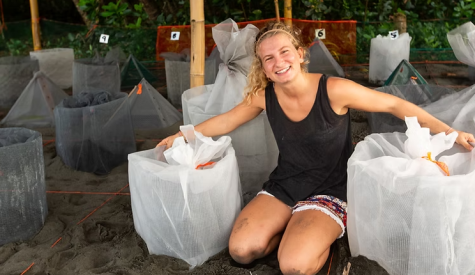
Ms. Brislen, the IB Marine Science teacher at SCHS, shared that the green sea turtles’ recovery is very uplifting. “It’s good news,” however, she emphasized that “they’re not back to normal everywhere,” reminding us that continued protection is vital. Reflecting on her work at the Pacuare Reserve in Costa Rica, Ms. Brislen described how she and her students would “walk the beach at night” to locate nesting turtles without flashlights or sunscreen, since the animals are extremely sensitive to light and chemicals. They measured the turtles’ shells and necks, carefully relocating eggs and protecting hatchlings from poachers. “About 60 percent of the people who come to the reserve are Costa Rican students,” she explained, highlighting the importance of educating youth in conservation. She added that human intervention remains necessary as “turtles face challenges from climate change, ocean currents, and even tourists.”
This comeback of the green sea turtle is a prime example of the planet’s ability to heal, and that is not too late to recover. It displays the power that individuals have when they work together and that humans can undo environmental issues that were created in the past. If such efforts are continued, much more progress can be made along with increased support of other species and their habitats as well.
Leave a Reply