
Emerson Watt | Opinion Editor
December 17, 2025
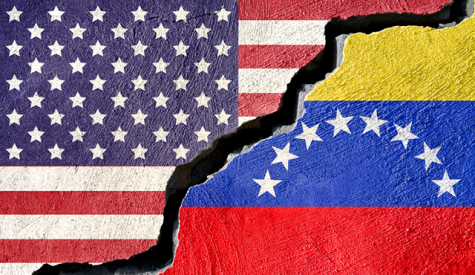
American intervention in Latin America is not new to Western righteousness. Whether it be trade disputes, political opposition, or pursuit of natural resources, the U.S. has repeatedly asserted its influence within the region. A recent reminder of this pattern is the Trump Administration’s renewed pressure on Venezuela.
The relationship between the two nations goes back to the early 19th century, when the United States expressed admiration for Venezuela’s independence movement. Figures like Simón Bolívar even studied the U.S. Constitution, viewing American governance as a potential model for post-colonial nations.
As decades passed, however, this multinational diplomacy quickly dissolved into intensified Cold War fears, and the U.S. economy primarily focused on the pursuits of nationalist interests and interventionist policies. From then on, U.S. companies rushed into Venezuela for its rich oil reserves and strategic political value.
Much like its involvement with Salvador Allende in Chile, Jacobo Arbenz of Guatemala, Juan Jose Torres in Bolivia, the United States also played a role in the 2002 coup attempt against Venezuela’s democratically elected socialist president, Hugo Chávez. This may explain the state of Venezuela’s fractured leadership today.
In his rise to power, Nicolas Maduro has obtained Venezuelan presidency through rigged elections and tyrannical strategies. In 2023, Maduro allegedly planned a disqualification of a Popular opposition leader, Marina Machado, who won with almost 90% of votes, under allegations of conspiracy against the ruling regime. That just hits the surface of Venezuela’s corruption. The Trump administration has recently shifted its focus, recasting the Maduro regime as a national-security risk tied to what officials describe as “narco-terrorism.”
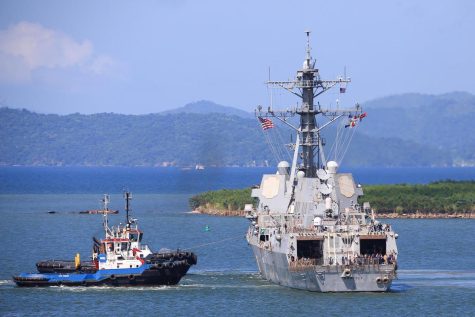
This re-framing has pushed the U.S. closer to open conflict. Since mid-2025, U.S. forces have expanded Operation Southern Spear, launching strikes on suspected trafficking vessels in the Caribbean and increasing military presence near Venezuelan waters. Officials insist the goal is to disrupt criminal networks, but critics warn the escalation crosses legal boundaries and risks transforming a targeted anti-drug effort into a broader, destabilizing confrontation.
Beyond security claims, analysts point to deeper political and economic motives. The U.S. has long denounced President Nicolás Maduro’s authoritarian rule, and rising tensions have intensified countless calls for democratic reform, or leadership change. Venezuela’s massive oil reserves further complicate the picture, with Venezuelan conspirators accusing the U.S. of using military pressure to destabilize the regime and assert influence over its energy resources.
Tanker seizures and rising diplomatic tensions show that the crisis is shifting from warning signs to its melting point.
When told about the political situation in Venezuela, SCHS senior Kate Jolley said she “had no idea about the devastating political corruption in Venezuela.”
Another SCHS senior, Mia Kocher, expressed similar concern, initially believing the conflict was “entirely due to oil sale disputes.”
Their reactions highlight a broader truth: as U.S.–Venezuela tensions escalate, understanding the full story is more important than ever which many Americans are unaware of.

Leave a Reply