
Ella Harry | Head Editor
December 17, 2025
In recent history, the U.S. has exerted more and more influence over the UK. Whether politically or culturally, it seems that Great Britain’s former role as the mother country of America has been forgotten almost entirely. One of the few categories in which the UK has continued to exert its influence, however, is through its music. Beginning with the Beatles’ British Invasion, America has been fixated on whichever band or musical movement comes out of Britain during a specific era. With the 1980s having been defined by Second British Invasion artists like New Order, and the ‘90s bringing a hyper-fixation on Britpop artists Oasis and Blur, British music has infiltrated American culture in nearly every recent decade.
This pattern is what has led many music-lovers to hypothesize which genre of British music will become distinctive to the 2020s. With Charli XCX’s experimental hyperpop and RAYE’s and Olivia Dean’s smooth, jazzy style, the competition to be crowned the most-influential artist and genre of British music present in American culture has become increasingly intense. Amid this conversation and almost out of nowhere, this past year has given rise to a new phenomenon: the British underground world. Blending trap, hyperpop, and alternative, among other styles, artists emerging from the British music movement known for being “underground” have seen a sudden rise to fame over the past few months.
The movement, named for its cult following, initially revolved around a handful of beloved artists, many with less than one hundred thousand monthly listeners on Spotify and other music streaming apps. More recently, however, British musicians’ fanbases have skyrocketed, with this shift in popularity beginning around June. While previously known by few, the fanbases of artists like fakemink, Feng, and Esdeekid have all grown exponentially in 2025. Due to their distinctive accents, tastefully produced tracks through collaboration with emerging producers like Wraith9, and innovative style, such performers have crossed the pond straight into the hearts of American listeners. Vaughan Harry, a freshman at SCHS shared that he, “first heard of Esdeekid from his cousin who lives in England. It’s been really awesome to see him blow up.”

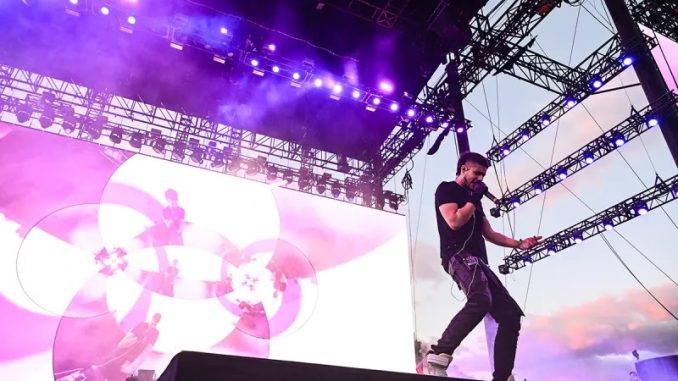
From late August to sometime around November alone, Liverpool-native rapper Esdeekid’s monthly listeners rose from sub-one million to over eleven million on Spotify. Such a shift has led to the artist selling out his North American tour almost instantaneously and opening a show for experimental-hiphop royalty Yung Lean. This pattern is not exclusive to just one artist, however. London based rapper Fakemink has experienced a similar rise in popularity, having opened for Drake and played his own set at Tyler, The Creator’s Camp Flog Gnaw festival in Los Angeles this past month. Senior Sofia Lobbezoo, who was able to attend Camp Flog Gnaw, said that the British rapper’s set was, “amazing. I didn’t really have many expectations going in, but he definitely was really cool to see.” Countless other artists support this pre-existing evidence of the British music phenomenon highly familiar to Americans: another British invasion.
While it will be interesting to see whether or not this musical movement has longevity throughout the rest of the 2020s, the impact on the music industry as a whole of British underground going mainstream has been undeniable in 2025. Due to this, and due to the rapid gain in popularity that this experimental genre has acquired, it is highly likely that, even if it does not become the sole defining genre of the era, British underground music will be a distinct reminder of the decade in the future.
As the music industry continues to change as a result of innovations in technology and social media, it will be interesting to see how historical trend patterns are altered going forward. In a generation so driven by short-form content and microtrends, will a similar sense of brevity reach the influence of music? While the UK underground might not stand alone in the way that the first British Invasion and Britpop did in influencing American culture, it is undeniable that British music had and continues to have a large influence on the US, and it will be interesting to watch this trend continue to unfold.

Leave a Reply