
Carson Neuhausen | News Editor
January 11, 2026
Sometime in the month of August, a group of CIA operatives dropped into Caracas, the capital of Venezuela. They were tasked with developing the “pattern of life” or daily routine of sitting president Nicolas Maduro. The agents were able to pinpoint Maduro’s location to Fort Tiuna, a military base in the southern sector of Caracas.
On January 3rd, 2026, at 2:00 AM local time, the U.S. government gave the green light on Operation Absolute Resolve. Simultaneously, targeted missile strikes were launched from 20 bases and ships to neutralize any anti-air systems that threatened the incoming ground assault force. The capture team was led by the elite special operations unit, Delta Force, in conjunction with members of the FBI hostage rescue team. They were transported by the 160th SOAR Night Stalkers, the USA’s premier helicopter unit. As pilots approached the Venezuelan coast, they were forced to keep their aircraft below 100 ft in the pitch-black conditions to avoid Caracas’ radar detection web. They then traveled the dangerous 10-mile stretch over land from the northern shores to Fort Tiuna, where they came under fire from Venezuelan/Cuban ground forces. As the air assault group flew over the capital, explosions erupted behind them as onlookers uploaded home videos of the operation to various social media platforms. In these videos, we can identify numerous aircraft, including the MH-47G Chinook and the MH-60L special-variant helicopters, which feature unique countermeasures for this type of mission. Senior Colin Koch told me that he’s “seen a lot of the videos” and that “it’s strange seeing our military in a country besides the Middle East. These helicopters are shooting in the middle of the city which makes the whole situation seem surreal.”
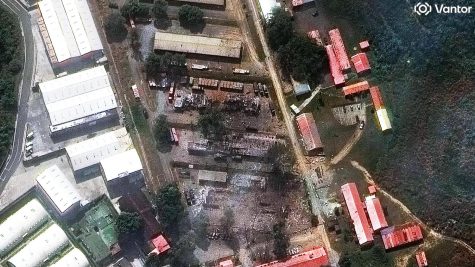
Once the force reached the compound, the complexities of the raid became apparent. Fort Tiuna is one of the most fortified military installations in South America and serves as Venezuela’s Pentagon. It is built into the side of a mountain, giving it a strategic height advantage and providing easy underground access. Intelligence reports that 5,000 of Maduro’s most elite soldiers are assigned to this post, along with multiple SAM (Surface-to-air) systems, APC units, and concrete pillboxes scattered across the 4-mile-by-2-mile area. However, these systems were defeated due to the groundwork laid by the U.S. Cyber Command in mid-December. Agents were able to infiltrate the Venezuelan power grid, and when the switch was flipped, it killed electricity to the base and large parts of the capital city. This cut off communications and made any chance of an organized response from Venezuelan forces next to impossible. SCHS senior Dylan Kieffer, when asked about his thoughts on the amount of preparation for the attack, said, “I’m honestly shocked at how long this was being planned for. It makes you wonder what world-altering event they’re planning right now.”
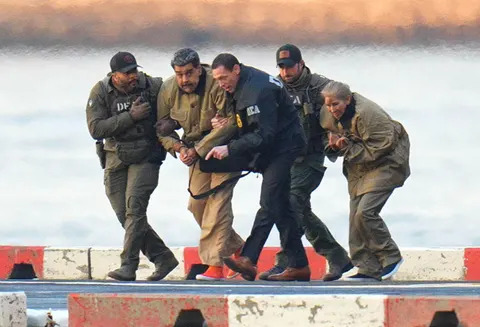
The soldiers then disembarked from their helicopters and headed directly to the on-base house that Maduro was located in. According to US General Caine, the group came under immediate fire, and Delta responded with “Overwhelming force in self-defense.” CIA operatives on the ground help guide the team through the compound to the safe room that sources inside of Maduro’s inner circle said he would retreat to. As this was happening, a converted Black Hawk helicopter was caught on video going weapons free with two miniguns and Hydra rockets in order to provide covering fire for the soldiers whilst under fire from mobile Igla anti-air missile systems. Around the same time, the breaching team broke into the president’s bedroom. Maduro and his wife were pulled out of bed, zip-tied, blindfolded, Mirandized, and air-lifted out of the area by Chinook helicopters.
Despite the importance of all the previous steps, the next is the most crucial. Extracting Maduro alive was an absolute necessity. If he were to die, it would appear as if America had conducted a political assassination, which would spark a geopolitical nightmare for the current administration. Fortunately for the strike team, the USA’s $832,000,000,000 military budget allows more than 160 fighter (including F-35, F-22, and F/A-18), fighter support (AWACS/KC-135s), and close-air support (USMC Vipers and Army Cobras) aircraft to create diversions and establish aerial supremacy across Venezuela, crushing any potential counterattack.
In the end, the strike package returned without fatalities, minimal injuries, and light damage (a Venezuelan anti-air unit slightly damaged one helicopter). The operation took a total of 150 minutes (2:00 AM-4:29 AM VT), 30 of which were spent on the ground inside Fort Tiuna. The next steps for the new Venezuelan leadership remain unclear. Between President Trump’s claim that the U.S. will run the country until a judicial election can take place and Delcy Rodriguez, Maduro’s vice president, being sworn in on January 5th, the future of Venezuela remains unknown.
Leave a Reply