
Emma Llamas l Writer
February 6, 2026
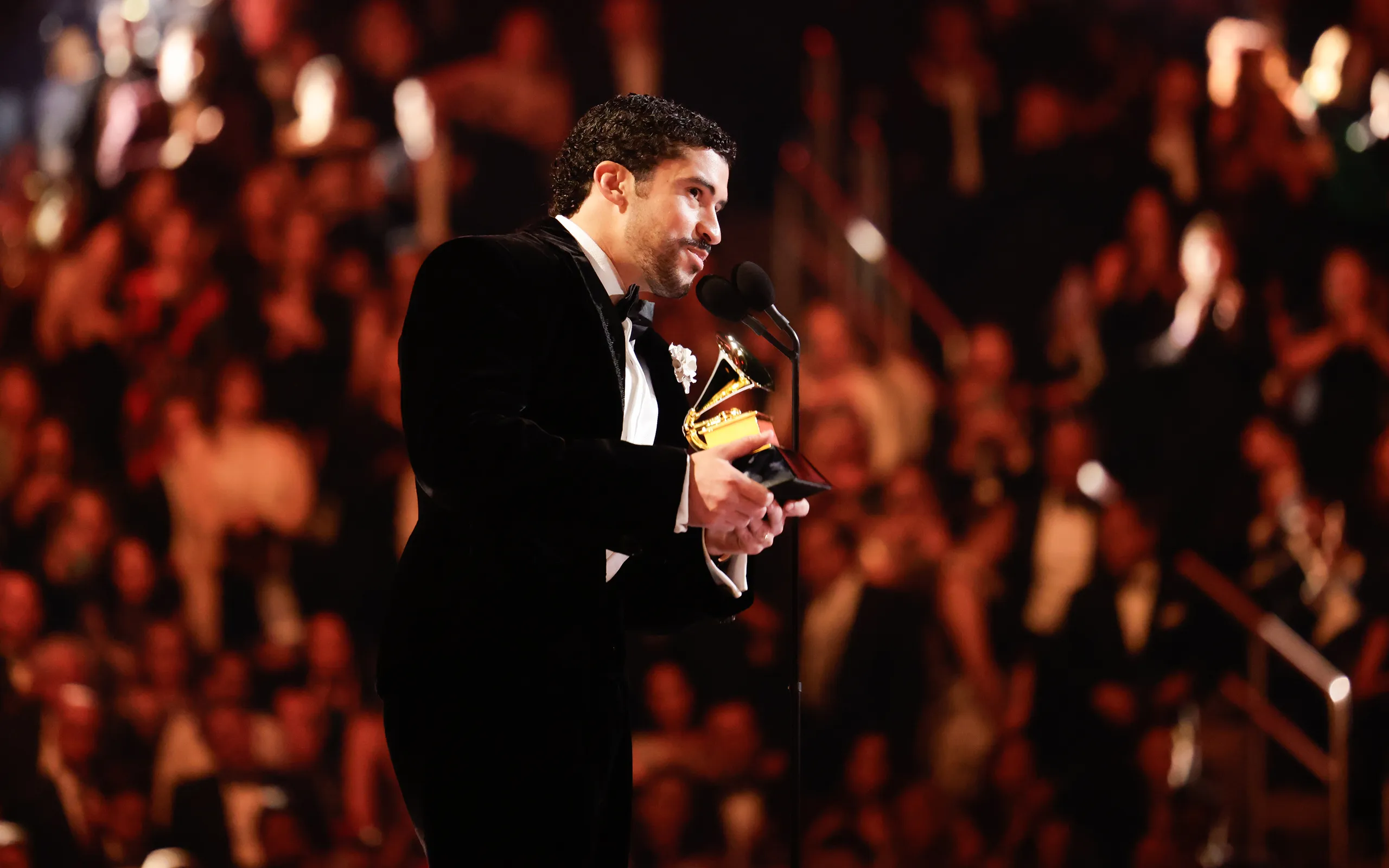
At age 31, Bad Bunny made history at the Grammys by having the first all-Spanish language album to win Album of the Year – the event’s most prestigious award. He beat top artists like Lady Gaga, Kendrick Lamar, and Tyler the Creator with his album ‘DeBí tiRAR MáS FOToS’ (I should have taken more photos). Throughout Bad Bunny’s career, he has always been politically outspoken against colonialism, gender norms, and government corruption. He has freely expressed his opinions through his music as well as in protest. But now in a time of political tension, this advocacy feels necessary.
The album holds clear references to the political reality of Puerto Rico, celebration of the culture, and a critical view of the gentrification and colonization that has changed it. Within its cover art, title, lyrics and genre mixes, the album touches on politically and socially simpler times, and a nostalgia-driven desire to go back to them. It talks about the effects US policy has had on people living in Puerto Rico throughout his lifetime, and the ongoing growing fear and tension surrounding Latin identities in the US.
Listeners can get a better sense of this mostly through the lyrics of songs like LO QUE PASÓ EN HAWAII (What happened in Hawaii) and DtMf, as well as the music videos of Baile Inolvidable (Unforgettable dance), and La Mudanza (The Moving/Relocation).
Because of its themes and messages, the album has resonated with many audiences in a powerful and personal way. His acceptance, as well as his speech, were emotional for the same reasons and enacted a standing ovation among the academy.
Senior Alan Servin noted that the album is “power[ful] because it shows support to Latinos in this time of political tension.” And it is true that unabashed support is refreshing in a time of censorship and cultural clash. Bad Bunny, and other artists like Olivia Dean, Billie Eilish, Joni Mitchell and Justin Bieber, addressed this as they openly opposed ICE while simultaneously expressing their views on the importance of immigrants in the US. Some showed these sentiments in their speeches, while others showed support and solidarity through “ICE Out” pins.
However, some people, like White House press secretary Karoline Levitt, reacted differently, and called his speech “ironic.” This reaction is similar to that of which he received when his Super Bowl halftime performance was announced, of which he will also be the first to perform solely in Spanish.
Senior Lexi Thi, when asked about the mixed reviews of Bad Bunny’s performance at the Super Bowl, added to the conversation that she “[doesn’t] know what everyone is mad about.” She also added the view that, since most who oppose his performance are against an all-Spanish set, they should “embrace what’s new.”
Opposing sides of the conversation continue to confront each other and the debate grows as the Super Bowl date comes closer. Even NFL players are polarized due to Bad Bunny’s Puerto Rican background because they want a ‘traditionally American’ performance. Still, he will be performing during the halftime show that will mark an exciting milestone for Hispanic representation in the media.
Bad Bunny has made major waves in the music industry by boldly using his art as protest and outreaching to audiences who find solace and comfort in the relatability of his work. His work, as well as his character, remains a reminder of what art is and how it can be used to embrace culture, struggle and identity. And as his music continues to reach wider audiences, it shakes the foundations of what is possible – through solidarity, messages, and themes that cannot be lost in translation.
Leave a Reply