
Mei Pearl Holmes-Selby | Sports Editor
March 15, 2026
In 2025, Lando Norris won his first Formula 1 (F1) Drivers Championship, which secured McLaren its second consecutive Constructors Championship. This feat created a dramatic ending to the season, as it ended in a three way race, with Norris, Piastri, and Verstappen neck and neck. In the end, Norris sealed the victory, with Verstappen coming in hot with silver and Piastri claiming another podium position for McLaren. Unfortunately, Ferrari was struggling with design issues, and Mercedes was struggling with simulation to real world track performance, preventing them from podium finishes. While the 2025 season was a whirlwind, the 2026 one is sure to be even crazier as new regulations have been made by the FIA.
The 2026 Formula 1 regulations include smaller, lighter, and even more agile cars, which feature a 200mm shorter wheelbase and 100mm less width to decrease weight by 30kgs overall. This light-weight model will reduce down force and drag, while increasing the aerodynamics that allow higher cornering speeds and lower drag on straights. Additionally, the V6 engine will run on 100% sustainable fuel, with increased electrical power. Not only will the drag reduction system (DRS) be replaced by an “Overtaking mode,” it will have a separate “boost mode” which will give drivers maximum power for attacking and defending.
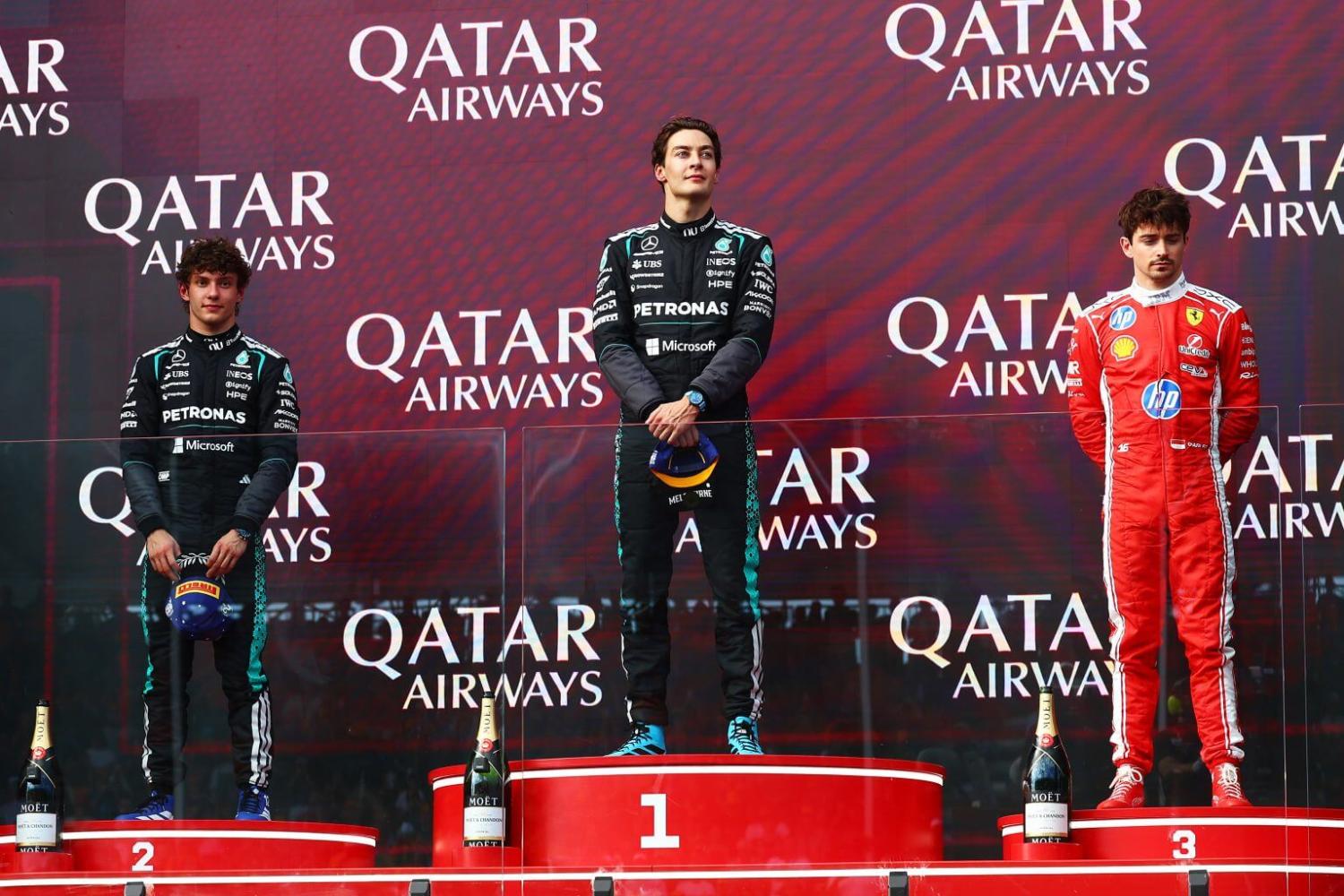
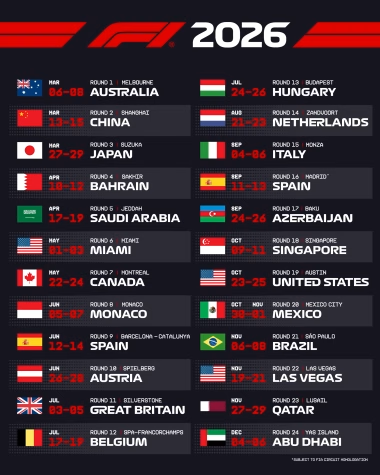
While audiences have been taking all aspects of the race into account when creating their expectations for Formula 1 racing, they now have a race weekend to compare their opinions to. The first Formula 1 Race Weekend took place at the Australian GP, from March 6-8 with Mercedes and Ferrari already projecting a promising season.
So what happened? A lot.
While the new cars were concerning to many, they allowed drivers to manipulate their racing techniques. For example, many cars were overtaking on turn 3, when, in the past, overtaking usually happened on turns 9 and 11. The close and tactical racing strategies are definitely interesting. Another exciting aspect includes the “overtaking and boosting modes,” as Ferrari often used that technique.
On the other hand, the weekend saw many flaws and issues that stood out, especially with the dueling performances of Mercedes and Ferrari. Besides the driver’s comment on the “artificial” feeling when overtaking, the cars were experiencing technical problems, especially with Aston Martin. The new, complex Internal Combustion Engine (ICE) electric starting procedures create high risk, leading to near-misses on the grid.
So what was wrong with Aston Martin? Aston Martin was experimenting with their “Vibration Crisis,” which is an extreme vibration from the Power Unit (PU). Specifically, the interaction between the ICE and the Kinetic Motor Generator (MGU-K) created a vibration. It also did not help that the car was made of carbon fiber, which actually amplified the vibrations rather than absorbing them.
Aston Martin’s cars took a heavy toll as the intense vibrations from the Honda engine literally shook the car apart, breaking mirrors and tail lights while damaging the high voltage battery packs. The team brought four batteries but they were quickly “chewed through” due to the vibrations. This forced them to run the race with just one functional battery per car, causing Fernando Alonso to DNF after his battery died on lap 21.
The first race weekend definitely provided chaos for fans to talk about, but some of it might not have been as bad as it seemed. As sophomore Isabella Frangopol put it, “it was a very solid race, especially with all the new changes,” but “the new regulations aren’t ruining racing” as they “just need to adapt and conform to the new technology that is more accessible now in F1 and its cars.” With this, Frangopol thinks that Aston Martin’s technical issues were “because there’s a connection issue in the team that makes everyone not be able to work well together,” which leads to issues that do not come up in their data.
Additionally, sophomore Madison Clark noted that she thinks that “Ferrari should have pitted” and that the “regulations aren’t as bad as they seem” since the FIA knows what they are doing.
After an exciting opening weekend, F1 fans look forward to seeing how the teams continue to adapt to the new regulations this upcoming weekend, March 13-15, and the Heineken Chinese GP.
Leave a Reply