
Margot Lee | A&E Editor
April 3, 2026
As the class of 2026 makes their college decisions, the concept of Greek life seems to come up frequently in the commitment process. But what does it mean to be involved in a sorority or fraternity, and how has participation shifted from service and philanthropy to cliques and social status?
The tradition is as old as our country, as the first all-male academic society, Phi Beta Kappa, was established in 1776 at the College of William and Mary. This specific fraternity soon spread to other universities across the United States. Later into the 1800s, fraternities such as Sigma Phi and Kappa Alpha shaped Greek life into what it is today. Additionally, opportunities for women began to emerge in the late 1800s as sororities like Alpha Delta Pi and Phi Mu were known as the mothers of Greek life.
Although modern times have changed the appearance of Greek life culture, the cornerstones of these societies have remained the same. Rooted in networking, friendship, sisterhood/brotherhood, and leadership, fraternities and sororities continue to highlight these values. Members participate in various activities: hosting social events and formals, volunteering for and supporting charities, and electing leadership positions for each chapter.
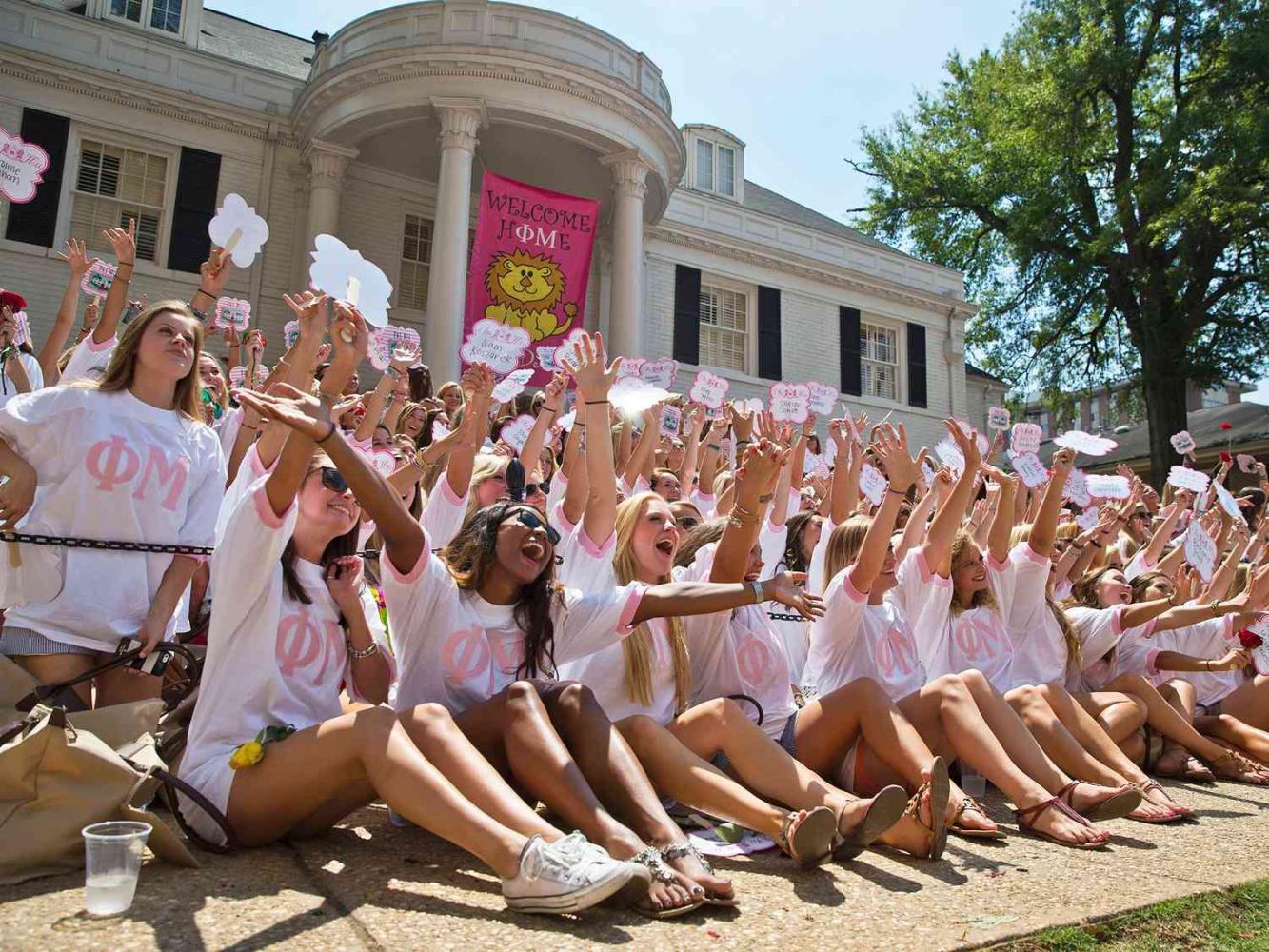
Today, these activities appear to have fallen lower on the priority list, as ideas of branding and a social media-driven image increasingly shape sorority culture; recruitment being the most significant portrayal of a sorority’s brand. Recruitment, more popularly known as Rush, is a scheduled process where prospective members cycle through various sororities and fraternities in order to find their best match. Usually spanning over a week, this period of themed days and events ends with the final stage known as Bid Day, where new members are selected by the leaders, or chapters, based on mutual interest.
The intensity of this process has inflated over time, with growing numbers of participants coupled with competitive selection. Larger public universities in the South, such as the University of Alabama, the University of Mississippi, and the University of Georgia, are widely known for their strong Greek life presence. Characterized by an intense recruitment process, high competition, and an emphasis on appearance and image, these SEC schools have, for many, turned Greek life into something closer to a popularity contest than a space to connect and succeed in an academic setting.

Rush week at the University of Alabama is especially intense, with the largest social media presence, its name “Bama Rush” has gone viral over the past few years. Most social media users crossed paths with “RushTok,” a trend where Alabama rushees post daily outfit checks and sorority bid reveals. Bama Rush placed strong emphasis on aesthetics and presentation, creating clothing trends and a specifically curated style of dress.
While Greek life culture can be associated with these stereotypes, it is still a meaningful way for first-year students to find community at a new school. Senior Jenna Sinden recently committed to the University of Oklahoma, a school known for having a significant Greek influence. Sinden said she plans to rush because “it’s a great way to make friends with similar interests and values.” On the other end of the spectrum, senior Ella Kittler mentioned she is looking forward to attending Northeastern University because “it’s not a major Greek life school.”
The presence of sororities and fraternities on college campuses have remained a major tradition in student life, but the meaning continues to evolve. While the age of social media has added aspects of pressure and competitiveness, Greek life offers students a sense of belonging that fosters academic success and social networking. For the class of 2026, the choice of going Greek is a significant deciding factor, as it can define the kind of community students surround themselves with.
Leave a Reply