
Polina Pelipenko | News Editor
November 23, 2025
The tensions in Sudan have been rising in the political sphere for the past six years, and the crisis has now become one of the biggest humanitarian emergencies in the world. In 2019, the previous dictator of Sudan, Omar al-Bashir, was overthrown by the people in a military-led uprising that lasted eight months. After the fall of his government, two groups were established to guide the transition: the RSF (Rapid Support Forces) and the SAF (Sudan Armed Forces). The two agreed to govern simultaneously with the understanding that the RSF would eventually join the national armed forces once the country stabilized after the revolution. Yet when the time came for the groups to merge and operate as a single military, neither wanted to surrender its power or control. Their disagreements led to negotiations beginning in 2021, but after nearly 2 years, the process collapsed, and violent fighting erupted in April 2023.
The collapse of discussions marked the beginning of a power struggle that quickly spread across Sudan, turning what began as a political disagreement into a full-fledged war. Street fighting, airstrikes, and the bombing of villages broke out soon after in the capital city of Khartoum before expanding into other regions. However, the consequences of the civil war have been felt most severely in Darfur.
As the RSF advanced deeper into Darfur, reports of ethnically targeted attacks began to emerge. Entire villages belonging to non-Arab communities, most notably the Masalit people, were burned to the ground. Civilians trying to flee were shot, families were separated, homes, markets, and medical centers were destroyed. Human Rights organizations and international observers warn that these patterns mirror the same tactics used during the early 2000s Darfur genocide, raising alarms that a new wave of mass atrocities is unfolding.
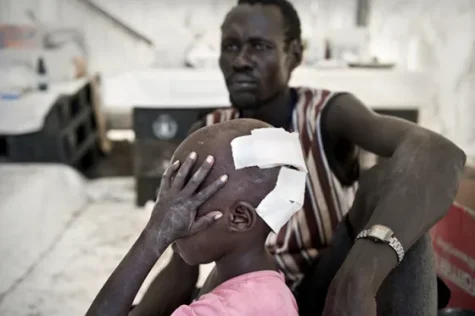
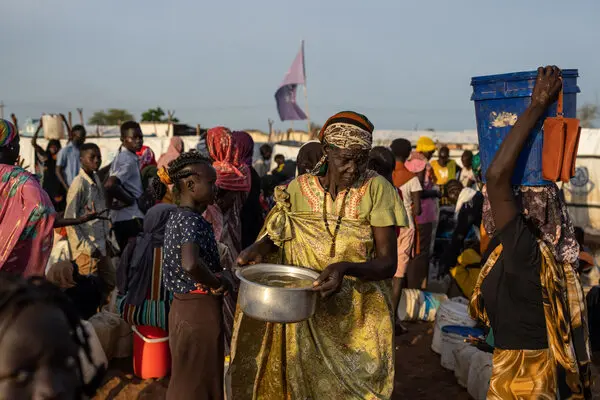
The humanitarian consequences have been catastrophic. Millions of people across Sudan have been displaced, with more than a million fleeing Darfur alone. Many families have had to walk for hours or even days across the desert with no food, clean water, or medical support. Those who reach displacement camps in neighboring Chad find overcrowded, under-resourced conditions where food, water, and medical supplies are severely limited. Relief agencies warn that rising starvation, disease outbreaks, and untreated injuries may soon begin to claim as many lives as the violence itself.
For children, the crisis is especially severe. Schools across Darfur have shut down, completely denying an entire generation their right to education. Many children show signs of trauma, nightmares, fear of loud noises, and difficulty speaking after witnessing violence. Parents describe the emotional toll of trying to protect their families while navigating overcrowded camps, missing relatives, and the constant threat of new attacks.
Senior Xavier Romero, when asked about the active war happening, commented on the “pile of bodies that you could see from space” and stated, “I feel like there’s gotta be another way to solve this without killing all these people.” Romero’s statements echo not just the comments of political powers but also those of the world. Sophomore Remy Wheeler, when asked about the war acknowledged the substantial lack of representation for the people. She said, “to be honest, I had not even heard of the war,” and when told about the 21 million people in despair in Sudan, she stated that “[she doesn’t] understand how no country steps in.”
Communities that once prospered for generations are now fractured or erased entirely. The destruction of farmland, hospitals, and markets means that even after the fighting stops, rebuilding will take years. Many survivors say they no longer know whether they have a home to return to. Yet despite the growing crisis, the international response has remained limited. Aid convoys are often blocked, communication networks have collapsed, and armed groups continue to fight for territorial and political control. Without stronger global attention, humanitarian access, and international pressure on the warring forces, experts warn that Sudan could face an even deeper catastrophe in the months ahead.
Leave a Reply